Posts

The Power of Encouragement

I recently heard an expression used in the context of overcoming the diversity issues in the IT and computing fields - what we need to combat the lack of diversity are 'circuit breakers' or practices that can truly break the cycle, or circuit of inequity. Put together with Google's CS research paper "Encouraging Students Toward Computer Science Learning" and a book called the Power of Our Words , I came across a circuit breaker that is so powerful, yet so overlooked - the power of encouragement. Consider the following from Google's paper - that students who have been encouraged by a teacher or parent are three times more likely to be interested in learning CS. Here's the clincher though - that not all kids do not have the same likelihood of receiving this critical encouragement. The report highlights the role that unintentional biases in well-intentioned parents and the very best of teachers have that in turn lead to inequity in terms of expectations, ins...

CSforAZ Updates

It's been an amazing journey this year - working with a group of dedicated volunteers to bring computer science to all.  I wanted to share our latest endeavor - a newsletter to update the CS community on all the latest updates and events. Here's our first edition!

Mentoring to Sponsor

Image
I was out at dinner a little while back with one of my former students and a college student majoring in computer science (CS) with whom I had worked on a variety of community initiatives around CS. It wasn't just any dinner though. It was intentionally arranged so that they could meet a contact of mine who was heading up a new initiative to inspire Latinas and their families about opportunities in technology - Technolochicas. You see, Technolochicas was looking for ambassadors - young Latinas who could serve as role models to the entire community of how they had pursued CS and technology-related endeavors. Immediately these two girls came to mind - both incredibly inspiring and accomplished at their young age already with CS. Being a Technolochicas ambassador would be an incredible way to raise their visibility, so when this contact was planning to be in town, we got to work on arranging a dinner together. Along with my contact and students, two other accomplished young Latinas w...

Three powerful words

As I start a new school year with a new group of computer science students, I am reminded of the three powerful words that capture the everyday, seemingly normal miracles of teaching and learning. It happened after teaching the first lessons of html and my 6th graders were just beginning to create ordered and unordered lists. All at once, I heard a chorus of voices exclaim with joy, "I did it." There you have it. Three powerful words. I did it. It struck me at that moment that this is what learning is all about. It's about being about to do something that I was not previously able to do. It's about surprising myself with what I am capable of doing - that is empowering. It's about stretching beyond what is currently possible and continuing to push the boundaries of what is possible. Then I took a step back to reflect further. What does this mean to me as an educator? I realized that this is what makes teaching such a joy. To be able to witness students celebrate th...

Equity and Access to CS

Image
As a CS educator, the issues related to equity in and access to CS are very real to me. As a middle school teacher, I had classes of 37 students with only 3 girls. Within a year after intentional support from administration and starting a Girls Who Code club, the numbers of girls enrolling in my classes were up and so was my hope that we really could get to the 50/50 mark.  With this experience in mind, I submitted a proposal to put together and moderate a panel for the annual convening of Arizona's superintendents, district, and school leaders - Equity and Access to K-12 Computer Science Education. For this panel, I invited Kevin Wang, founder of Microsoft TEALS, a K-12 district representative, Code.org regional partner representative, and a higher education representative from the CS department at University of Arizona. Together, the panel addressed questions related to equity and access to CS education. To start everyone off with an overall understanding of the issue, I showed t...

Real-life Stories

Image
There is nothing like a story to inspire, uplift, and give hope that anything is possible.  Now imagine listening to the real-life stories of women as they share their experiences that exemplify the traits of determination, passion, advocate, resilience, inspire, and endurance. That is powerful. With my school district's equity challenge, my director of IT enlisted the help of others to host a 'real-life stories' night to highlight the experiences of women in IT.  I was honored to be invited as one of the speakers along with two of my former students. The stories were incredible - a refugee who endured to establish a new life for her family, spending her last coins on buying a dictionary in order to learn English and who is now an IT specialist; a medical school student who is now researching neuroscience and learned to be 'relentlessly optimistic'; two students who first experienced the power of computer science as members of their robotics team in middle school wh...

Going for the Gold

Image
I had a very special experience recently - to attend my first Girl Scout Gold Award ceremony. This year, I've been the project mentor for a former student of mine who has been working on her Gold Award. Her project? To start Coding Clubs in the community, of course!  We started back in the fall of 2016 by running a few coding clubs at a Boys and Girls Club and a public library to see which materials would work the best. She decided to go with Code.org's K-5 curriculum for a few different reasons - accessible entry point to CS for ALL kids no matter their background, streamlined platform with easy sign-in and tracking participants' progress. So, she did it! She continued by reaching out to new community centers and recruited high school friends who needed volunteer hours to help run the clubs. The best part? She created continuity folders so that each site could continue running the clubs on their own. This ceremony was the very first event held at the brand-new Parsons Lead...

Discover and uncover

Image
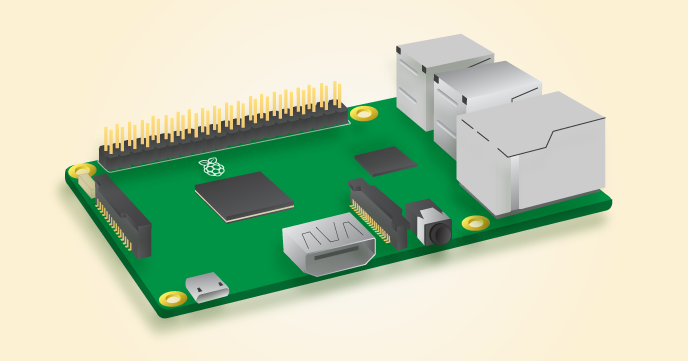
I've been moving on with CS Discoveries. In between Units 1 and 2, I had my students explore a variety of centers including Raspberry Pi, Finch robots and Hummingbird robotics. After Unit 1 where they defined what a computer was and really dove into input, storage, processing and output, I wanted them to have a hands-on experience of seeing input and output in action. In particular, I love this diagram of Raspberry Pi to really drive this point home of what computers are and the video available here. Input devices (e.g. keyboard, mouse) send data to a computer. Output devices (e.g. monitor, speakers) send data to the user. Storage in the Raspberry Pi is in the form of a microSD card. Now moving on to Unit  of CS Discoveries. I thought that the sequence of lessons that led up to this lesson were critical in several ways - Lesson 1 to really have students notice and observe the structure and formatting that appears on websites - differences, similarities and why such structures exi...

APP-lying the Problem-solving Process

Image
I'm wrapping up Unit 1 of CSDiscoveries with lessons 8 and 9 that really complement one another well. With lesson 8, we spent time considering the input and output of apps and whether input comes from the user, internet, or smartphone. Students spent time considering what information is input to the smartphone, what problem the app is trying to solve, what information is process by the smartphone, and what information is output to the smartphone.  With lesson 9, I initially thought that my students may be a little disappointed that they were not actually going to code their app, but they ended up having a great time. I really tried to focus them on applying the problem-solving process that we've been focusing on all unit to their app concept creation and then also ensuring that they included input, output, storage, processing on their posters. During the making of the posters, I tried to bring up algorithms again and apply this to their app concepts. For example with Coupon Cl...

Colored Bits

Image
I'm moving along with CSDiscoveries and this week continued with lesson 6 called Processing with Bits.  This lesson was awesome!! My students really enjoyed going through all the levels and figuring them out in pairs.  They used the pixel filtering tool to explore how colors are represented using on/off options and combinations. I tried to make the connection to previous lessons ( L4 - what is a computer ?; L5 - representing with binary ) explicit so that students could connect what they did with the face up/down challenge to input/processing/output and representing information using binary in this lesson. I did not go into colors, binary, and computers, but just treated this lesson at face-value and had students go through the leveled puzzles that were scaffolded really well. The initial task of identifying the 8 colors along with their 'binary representation' was important and students could use that to refer to as they completed the subsequent puzzle levels. I ended up ...

I'm a pilot!

With the new year, comes new challenges and...new curriculum that I am piloting this semester. I am so excited that Code.org's long-awaited computer science curriculum for 7th-9th graders is here. It's called CS Discoveries. At its heart, it truly has the middle schooler in mind. With a focus on personal expression through a project-based approach, it is appealing to this age range and there desire to express their unique perspectives, interests, and goals. It is designed to be accessible to every learner, and provides the perfect transition to typed code from block programming. At the same time, the tools used in this course such as App Lab and Game Lab are open-ended enough to be engaging for all students, regardless of programming background. Physical computing is also integrating into this course, providing students with the opportunities to 'make things happen' with an Arduino platform. The heartbeat of the course is the problem-solving process which is integrated ...

Ever wanted to track Santa?

Image
Now you can! Google's  Santa Tracker  is just in time for the holidays where students can code a snowflake, track Santa using Google maps and more. New activities and lessons unlock throughout the month of December and are connected to subject areas such as computer science, geography, social studies, and language.  Play, learn, watch, code, and explore!  Here is a sampling: Code Boogie - Choreograph a dance for the elves using code Holiday Traditions - Learn about traditions all around the world from Canada to Ghana, France to Australia. Learn Languages - See and hear different holiday greetings translated into different languages Play Present Bounce - Try to get the present to land in just the right place There are these and more activities to come throughout the month, right here in Santa's Village.   On the 24th, there is an invitation to come back and track Santa all night!

Equity in CS: Empowered to take action

Image
A few years ago, Google came out with a paper entitled, "Women Who Choose Computer Science - What Really Matters." The link to the entire paper is available here.   It's an incredible paper in many ways, but the big takeaway for me was that we are in a position to do something to close the gender gap in education right now. To me, this was incredibly empowering - to realize that there are factors substantiated by research that make a tremendous difference in a girl's life in terms of choosing CS as a degree major. According to the paper, it all comes down to encouragement and exposure. Specifically, this paper found four key influencing factors: social encouragement, self perception, academic exposure, and career perception. Even more amazing was that this research found that uncontrollable factors such as parental occupation play a limited role in women choosing a CS degree. Armed with this understanding of the impact that exposure and encouragement can have, I start...

Get Ready! Hour of Code 2016

Image
I am so excited to share about the more than 200 Hour of Code activities available here . What is the Hour of Code? It's a global effort to "celebrate computer science" that has engaged communities all over in one-hour tutorials.  It is held during Computer Science Education Week to recognize " Amazing Grace' s" birthday. One of my favorite quotes from Grace Hopper herself: "I've always been more interested in the future than in the past." How fitting a statement to describe the Hour of Code as it inspires our future with the wonders and possibilities of computer science. A really awesome feature on the Hour of Code site  here  is the filter tool that allows searching by grade level, teacher experience, student experience, classroom technology available (Android, iPad, no computers and more), topic, activity type, length, and language (blocks, typing, or other). For those with no computers or devices, it is still possible to teach computer scie...

Computational Thinking for Educators

Image
It's been a while since I first wrote posts about computational thinking and the resources available since those first posts have grown tremendously. One of my favorite ones for educators is the Computational Thinking for Educators course with Google available here .  While the original course is finished, the modules are still available on the website. Here is a brief video introducing the course: What I love about it is that it really brings computational thinking (CT)into the world of educators. Through simulations and tasks that participants can interact with, learners see that CT can be applied to various subject areas. For example, in the 'traveling problem,' learners experiment with finding the shortest, most efficient path on an actual Google map with the goal of exploring algorithms. There is the opportunity to explore and find patterns in music using an activity created using Pencil Code.  With Turtle geometry, learners have the opportunity to apply CT while findi...

CS Goes Global

Image
In an increasingly globalized world, it is all the more essential that students not only gain knowledge of world around them, but also gain experiences of engaging global collaboration.  Indeed, global awareness is one of the interdisciplinary themes that the Partnership for 21st Century Skills includes in its framework (P21, 2007).  Specifically, this theme includes not only being able to address global issues, but also engaging in global collaboration with others from diverse cultures (P21, 2007).  The thread of global awareness coupled with the theme of learning and innovation which highlights the imperative to focus on creativity, critical thinking, collaboration and communication (Larmer, Ross, & Mergendoller, 2009) provides a powerful way to approach research into global collaborative inquiry.  Implicit in this is a focus on students’ ability to work in a creative way with others which emphasizes their ability to be openminded to new ideas while incorporati...